

How Often Should You Get a Facial? A Practical Guide
How often to book a facial depends on the treatment, your skin and your goals. A practical guide to monthly facials, series and timing before an event.
Reviewed by Demi Broughton, Licensed Esthetician
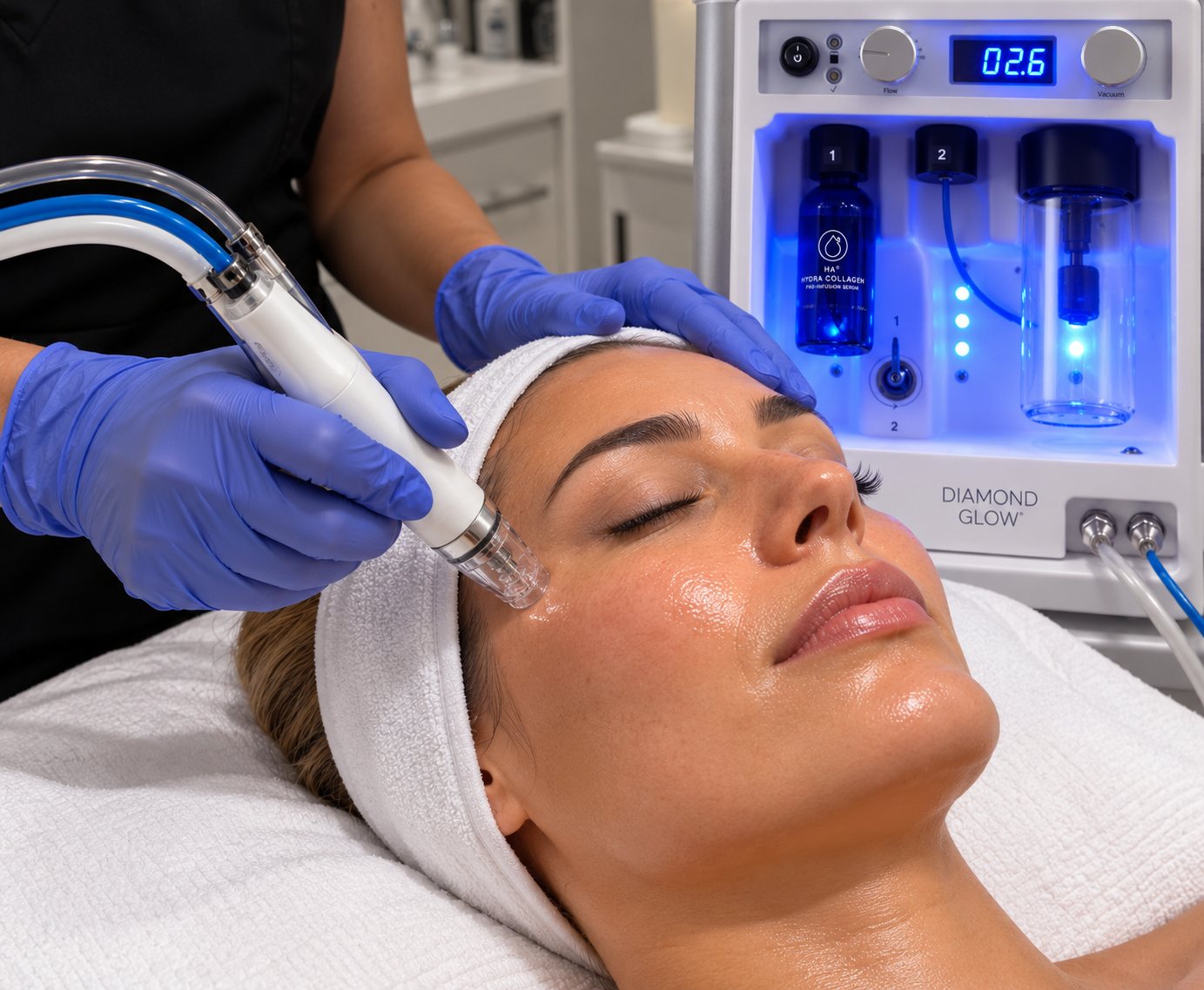
Most people book a facial when their skin looks tired or an event is coming up, then wonder whether they should be going more often. The honest answer is that the right rhythm depends less on a magic number and more on which treatment you’re getting, what your skin is doing, and what you want from it.
The short answer: about every four to six weeks
For most people, a professional facial every four to six weeks is a sensible starting point. That range isn’t arbitrary. It roughly matches how long your skin takes to renew its surface: in younger adults, cells move from the deepest layer of the epidermis to the surface and shed in about four weeks, and that process tends to slow down with age.
A facial that exfoliates, clears pores and hydrates gives that cycle a reset. Come back too soon and you’re working on skin that hasn’t finished rebuilding. Wait several months and you’ve lost most of the benefit, so each visit feels like starting over rather than building on the last one.
Think of four to six weeks as the default, then adjust for the treatment and your skin.
Frequency depends on the treatment
“Facial” covers a wide range of treatments, from a gentle cooling session to a peel that causes days of flaking. A gentler treatment can be repeated more often; a stronger one needs more time between visits. Here’s how that plays out across common professional treatments.
Hydrating, no-downtime facials. Treatments like DiamondGlow exfoliate, extract and infuse a serum in the same pass. The glow typically lasts two to four weeks, which is why a monthly visit is a common maintenance rhythm. Oxygen-style infusion facials such as BREEZE follow a similar pattern.
Dermaplaning. Dermaplaning removes dead surface cells and fine vellus hair with a sterile blade. Every four to six weeks lines up with natural turnover. Doing it more often doesn’t give you smoother skin; it just removes protective surface cells before they’ve had a chance to do their job.
Chemical peels. Frequency depends heavily on depth. Mild, superficial chemical peels can be part of a four-to-six-week maintenance routine. Moderate peels involve several days of visible flaking and are usually done as a planned series, with longer gaps and careful sun protection in between. This is the category where it’s most important not to self-schedule.
Cooling treatments. Cryo facials work by temporarily calming and de-puffing the skin rather than exfoliating it, so they can be repeated more often, even weekly, and are useful the day before an event.
Series-based treatments. Some treatments are designed as a course rather than a one-off. Radiofrequency skin tightening, for example, is usually done as a series of sessions one to two weeks apart, followed by maintenance every few months. With these, the schedule is part of the treatment plan, not a matter of preference.
Adjust for your skin and your season
Once you know the baseline for your treatment, a few things can move it in either direction.
Congested or oily skin often benefits from a steadier rhythm, closer to every four weeks, because pores refill and the surface builds up faster. Regular extractions and exfoliation help keep things from getting backed up.
Dry or dehydrated skin may do better with hydrating facials on a monthly schedule and fewer strong exfoliating treatments. Over-exfoliating dry skin tends to make it feel tighter, not smoother.
Redness-prone or sensitive skin usually needs gentler settings and more space between exfoliating treatments. Tell your esthetician up front so they can start conservatively.
Mature skin renews more slowly, so the gap between exfoliating treatments can sometimes stretch a little longer, while hydration and firming-focused treatments may be worth keeping regular.
Season matters too. In San Clemente and the rest of South Orange County, year-round sun means daily sunscreen is non-negotiable, especially after any exfoliating treatment, since freshly resurfaced skin burns and darkens more easily. The dry Santa Ana winds in fall and winter can leave skin dehydrated and flaky, which is a good time to lean toward hydrating treatments and away from aggressive peeling.
Signs you’re overdoing it
More isn’t better with facials. If you notice any of these, it’s worth spacing visits out or switching to a gentler option:
- Skin that stings when you apply a basic moisturizer
- Persistent tightness, redness or a shiny, almost waxy look
- More breakouts or more sensitivity than before you started
- Flaking that won’t settle between appointments
These are usually signs that the skin barrier needs a break. Your home routine counts here too: using strong acids or retinoids at home while also booking frequent exfoliating facials is one of the most common ways people overdo it.
Planning facials around an event
For a wedding, holiday party or photos, timing matters more than frequency.
- Two to three months out: start a monthly routine if you don’t already have one. It gives your skin time to settle, and gives you a chance to learn how it responds to different treatments.
- Several weeks out: this is the latest point for anything that causes visible peeling, such as a moderate peel. Don’t try a strong treatment for the first time close to an event.
- One to three days before: a no-downtime facial. A hydrating facial like DiamondGlow can go one to three days before; dermaplaning is best two to three days before, so any pinkness has settled and makeup goes on smoothly.
- The day before: a cooling facial is an option if you want calmer, less puffy-looking skin.
How to choose your rhythm
If you’re not sure where to start, these questions help:
- What do you want? Steady maintenance, a specific concern like dullness or congestion, or prep for one date?
- How much downtime can you accept? If the answer is none, stick to no-downtime treatments and space stronger ones around your calendar.
- What’s your home routine? A good routine stretches the benefit of each facial; a harsh one may mean you need fewer exfoliating treatments, not more.
- Anything medical going on? Pregnancy, isotretinoin (Accutane) or prescription retinoids, an active skin condition, or a recent cosmetic procedure can all change what’s appropriate. Check with your doctor and mention it at your consultation.
What to expect at Skin Restore
Skin Restore is a by-appointment spa in San Clemente, run by licensed esthetician Demi Broughton. A first visit starts with a look at your skin and a conversation about your goals, your routine and your schedule, so the plan fits your skin rather than a generic calendar.
From there, the suggested rhythm follows the treatment. DiamondGlow appointments run about 30 to 45 minutes, with the serum chosen for what your skin needs that day, and most clients come in monthly to maintain. Dermaplaning can be booked on its own or as a roughly 15-minute add-on before another treatment, typically every four to six weeks. Peels are matched by depth to your skin, and stronger ones may involve a few weeks of at-home prep beforehand. You’ll leave knowing when it makes sense to come back and what to do at home in between. The full menu is on the treatments page.
Common questions
Is it bad to get a facial every week?
For most exfoliating facials, yes, weekly is too often. Skin needs time between sessions to rebuild its surface, and over-exfoliating can leave it tight, red and more reactive. A few gentle treatments, such as a cryo facial, can be done more often. Your esthetician can tell you which is which for your skin.
How often should you get a facial in your 20s?
Many people in their 20s do well with a facial every four to six weeks, or even seasonally if their skin is calm and their home routine is solid. What matters more than age is what your skin is doing: congestion, dryness or uneven tone may call for a more regular rhythm for a while.
Do you need to get facials every month to see a difference?
No. A single facial can leave skin looking brighter and feeling smoother for a couple of weeks. Monthly visits are about keeping that going and building on it, not about seeing anything at all. Results vary from person to person.
How far apart should facials be before a wedding?
If you're starting a few months out, monthly facials give your skin time to settle into a routine. Book your last no-downtime facial a few days before the day itself, and save anything that causes visible peeling for weeks earlier, not days.
Can I get a facial if I'm pregnant or using a retinoid?
Some treatments may be fine and others may not. Check with your doctor first, and mention it at your consultation along with any prescription skin products you use, so your esthetician can choose or adjust the treatment.
This article is general education, not medical advice. Which treatment suits your skin is decided at your consultation.